

One person, one order, and 2 platforms telling you they sold it.
Platform ROAS is the sales an ad platform credits to its own ads, divided by what you spent there.
One order, 2 claims
Follow one shopper:
- Monday
Clicks your Meta ad, looks around, leaves
Meta ad - Wednesday
Searches your name, clicks your Google ad
Google ad - Thursday
Comes back and buys an £80 jacket
£80 sale
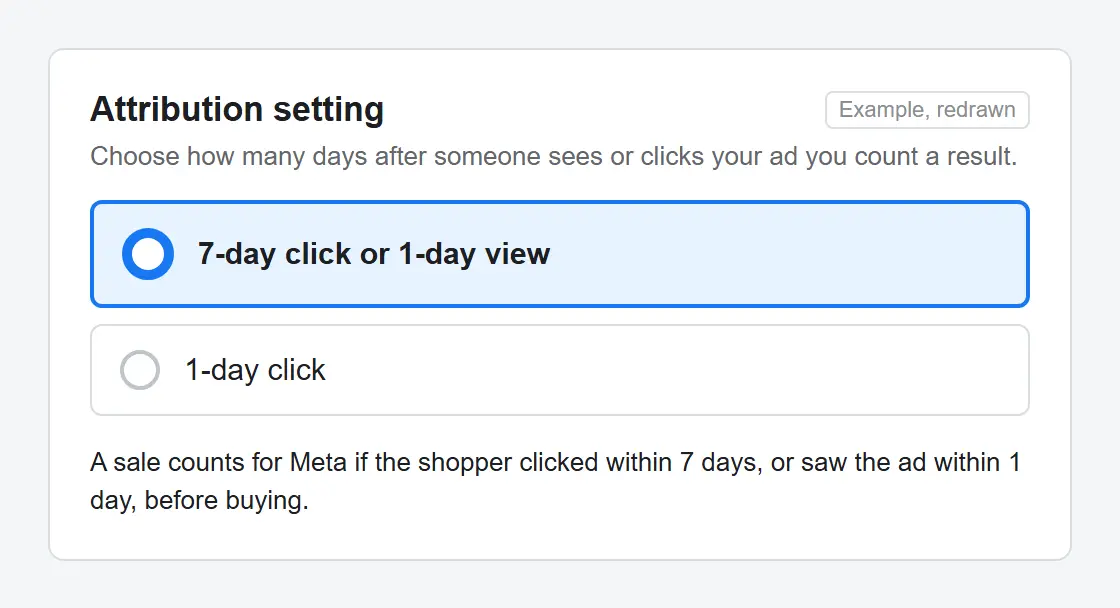
Meta counts a purchase within 7 days of a click, or 1 day of a view, by default. The Monday click is inside that window, so Meta claims the jacket. Google counts its own click under its own settings, so it claims the jacket too.
Neither platform makes anything up. Each sees its own part of the journey and nothing else.
3 ways it leads you wrong
It overrates retargeting. People who visited, added to basket or bought before were close to buying. The retargeting ad shows up at the end and takes the credit.
It underrates prospecting. Ads to people who have never heard of you report a lower ROAS. The sales often come later, through a Google search or a direct visit, and another channel gets the credit.
It gets the wrong campaign paused. Pause prospecting because its ROAS looks weak and fewer new people reach your site. A few weeks on, there is less to retarget, and retargeting’s ROAS drops too.
What to track instead
Use your real sales:
- Blended ROAS: Shopify sales ÷ total ad spend
- MER: Shopify sales ÷ total marketing spend
Check either one against your break-even ROAS. Say yours is 3.5. Here is what 2 different months tell you:
- MER of 4.8: the marketing pays, whatever any one dashboard says.
- MER of 2.9: the marketing loses money, even if one campaign reports 6×.
Get the number the dashboard cannot give you.
What platform ROAS is good for
Keep it for the small calls inside one platform:
- Campaigns. Campaign A at 4× and Campaign B at 1.8× on Meta: A is probably doing better.
- Creative tests. 2 ads, same audience: platform ROAS shows which message lands.
- Bid targets. Meta and Google still need a target ROAS to bid against. Set it knowing the platform’s figure runs higher than your blended ROAS.
Use platform ROAS for decisions inside a platform. Use blended ROAS or MER for decisions about it: how much budget it gets, or whether you keep it.
Related reading
- What is MER?: the number that cannot double count, with a calculator
- Meta ads working, business shrinking?: what happens when you run a business on platform ROAS
- Easier Ads Budgeting: how much a new channel needs to spend for a fair test
Peak week is when dashboards flatter you most. Let's see what's really happening in yours.
Clean numbers are the job of our tracking and reporting service. The first-party data checklist shows where your own data stands today.
Platform ROAS says yes but profit says no? Book a free call and we’ll read the numbers with you.
Quick answers
Why is platform ROAS misleading?
Each ad platform counts the sales it can link to its own ads, using its own rules. So Meta and Google can both claim the same order, and some of the sales they claim would have happened anyway.
What should I track instead of platform ROAS?
Blended ROAS or MER: your real sales from Shopify divided by your total spend across every channel. Check it against your break-even ROAS, worked out from your costs per order.
Is platform ROAS ever useful?
Yes, for comparing things inside one platform. If one campaign reports 4× and another 1.8× on the same platform, the first is probably doing better, even if both figures run high.
Why does retargeting show such a high ROAS?
Retargeting shows ads to people who already visited, added to basket or bought before. Many were about to buy anyway, and the platform counts those sales as its own.