

Two places to buy, no clear view of sales
Customers could buy the ScreenBar lights on BenQ’s own website or on Amazon. BenQ’s own systems could not reliably match those purchases back to the ads, so it was hard to tell which ads were selling.
One tracker for both stores
After testing a few approaches, we built one shared purchase tracker that counted clicks and sales on BenQ’s website and on Amazon. With sales tracked in both places, we could judge every ad on the orders it drove, then improve click-through rate and cost per click from there.
Ads that start with the problem
We made the ads for Meta, Instagram and Google, aimed at people across Europe who work at a screen all day.
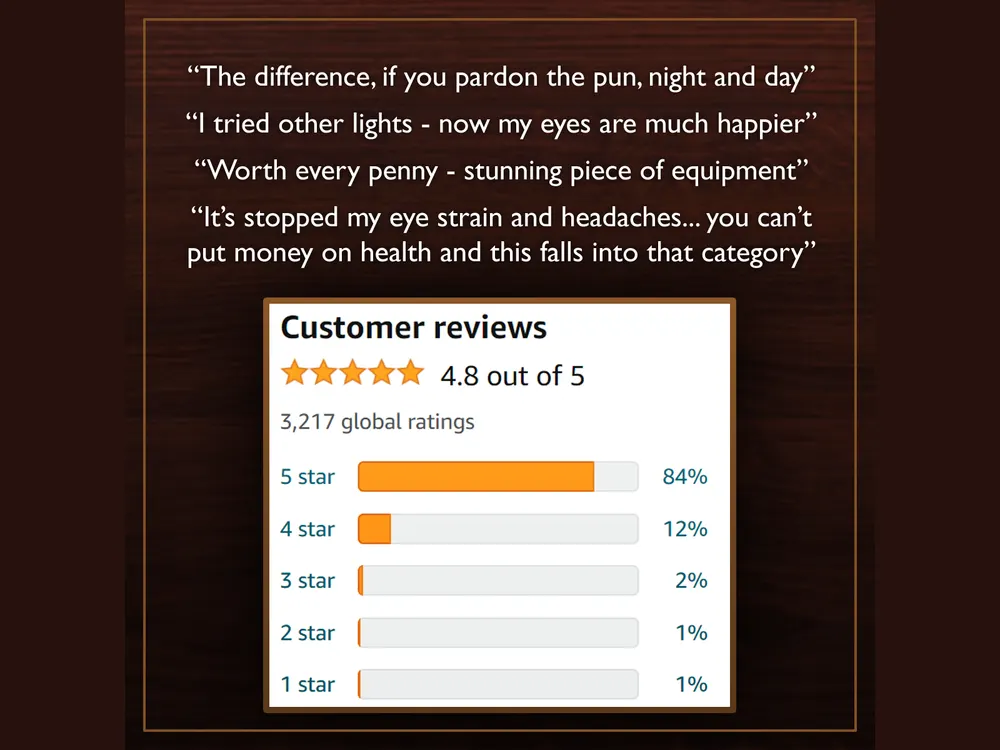
The ScreenBar video opened with a question, “Working all day on the computer?”, then showed the glare and eye strain the light is built to fix, and the bar clipping onto a monitor. Our carousel ads gave each feature its own card: comfort for the eyes, light that stays off the screen, a clip that fits any monitor and a desktop dial. The last card showed the product’s Amazon reviews: 4.8 out of 5 from 3,217 ratings.
Why it worked
Each card answered one thing a buyer might ask, and the reviews showed that thousands of buyers were happy with it. The shared tracker meant the budget followed orders on both stores, so ads that sold on Amazon got the credit they earned.
The result
Traffic to BenQ’s website and Amazon product pages rose, and BenQ’s marketing manager reported unusually high sales numbers from the day we took over the ads.