
The question behind the research
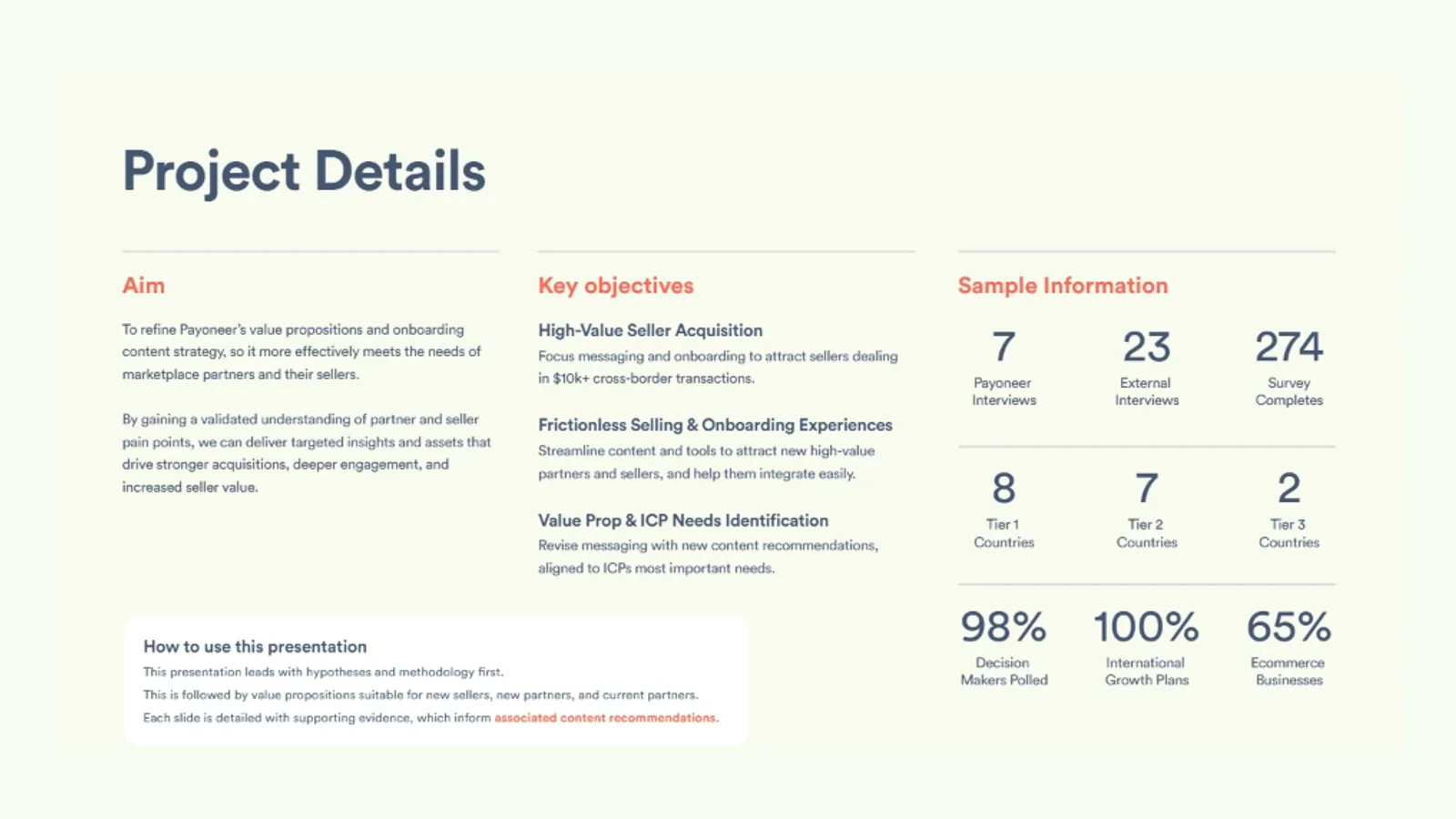
Payoneer wanted to win more sellers who move $10k or more across borders, make signing up easier, and give its sales teams messages backed by evidence. That meant asking partners and sellers directly, then ranking what they said.
Interviews and surveys across regions
We ran 30 interviews: 7 with Payoneer’s own teams and 23 with marketplace partners and sellers, including people at major marketplaces. We then surveyed 274 people, 198 sellers and 76 marketplace partners, across 17 countries. 98% of the people polled were decision-makers.
To cover every region on a fixed budget, we worked around the survey tool’s limits instead of dropping regions. We added a survey to an earlier Israel study so its findings would stand up to questions. Partway through, we added a new type of target customer: larger businesses.
What we found
Every decision-maker we polled planned to grow internationally, and 65% ran ecommerce businesses.
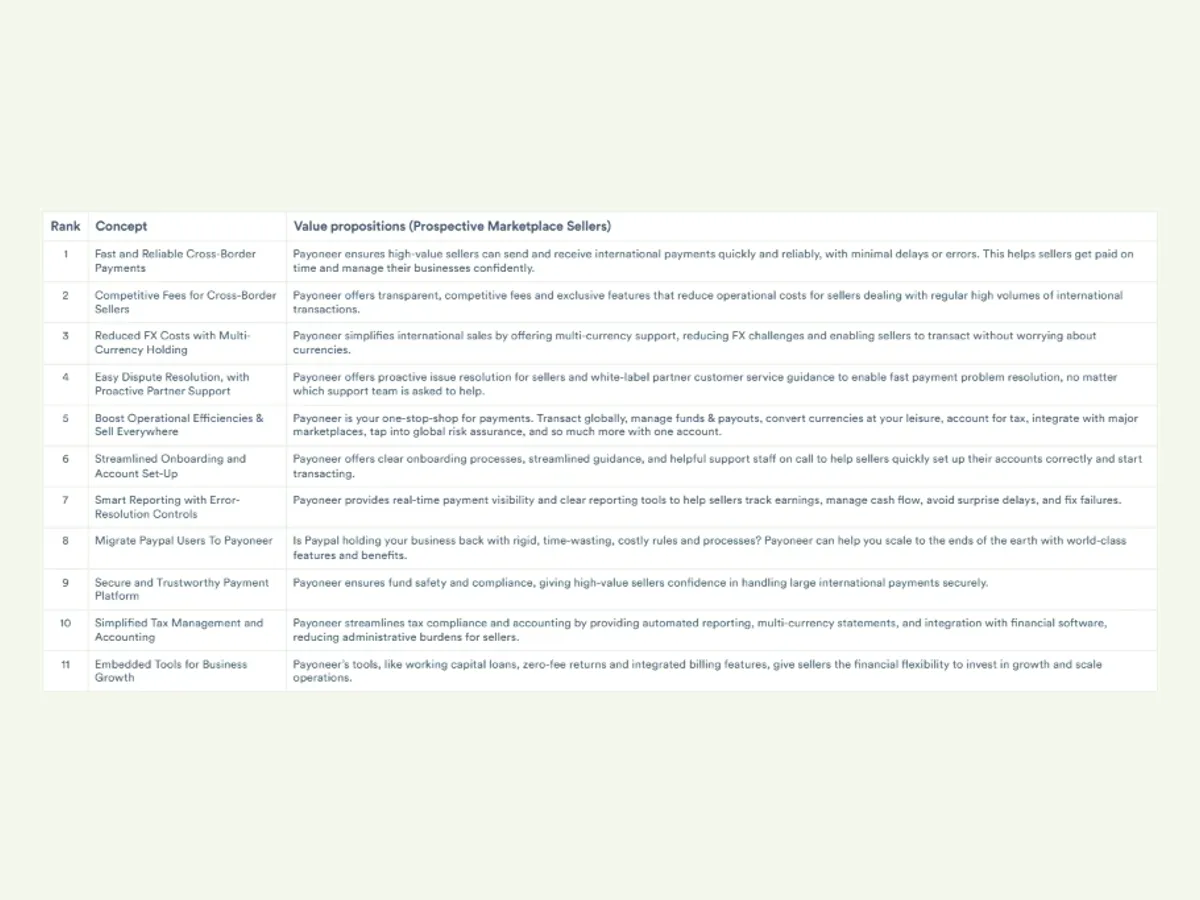
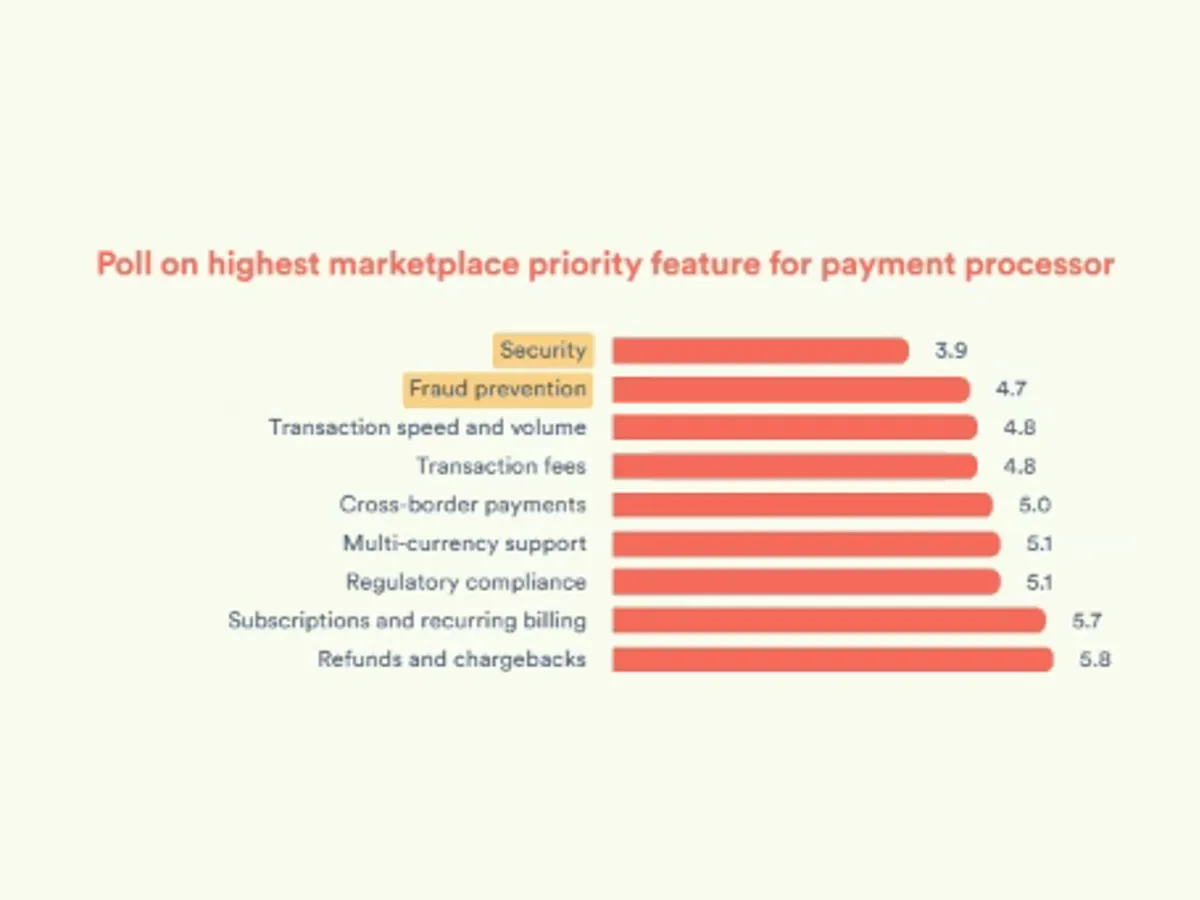
Different audiences wanted different things. High-value sellers ranked fast, reliable cross-border payments first, ahead of low fees. Marketplace partners ranked security and fraud prevention above transaction fees. Sellers kept asking for human support and video walkthroughs to get set up faster. In Israel, 70% of business owners named high fees and slow transfers as major pain points.
Why it matters
Without this, the easy answer is to lead every message with price. The research showed that would undersell Payoneer to the partners and big sellers who care most about speed, safety and support.
Why it worked
Asking partners and sellers directly, then ranking their answers, gave Payoneer evidence in place of guesswork. With 274 survey responses across 17 countries, 98% of them from decision-makers, the findings could stand up to questions. Splitting the results by audience showed that sellers and partners value different things, so each group could get its own message.
The result
Payoneer received a ranked list of reasons to choose it, for sellers, prospects and marketplace partners, each backed by quotes and poll data, plus a plan for the sales materials to carry them.