
Finding the products that sell
Ando started with no customers and no sales history. Our first job was to find out which products parents would buy and which ads made them stop scrolling. We tested which products sold best and moved the budget to the winners.
The products we found became Ando’s best sellers. They are still the hero products on the Ando homepage.
One product per card
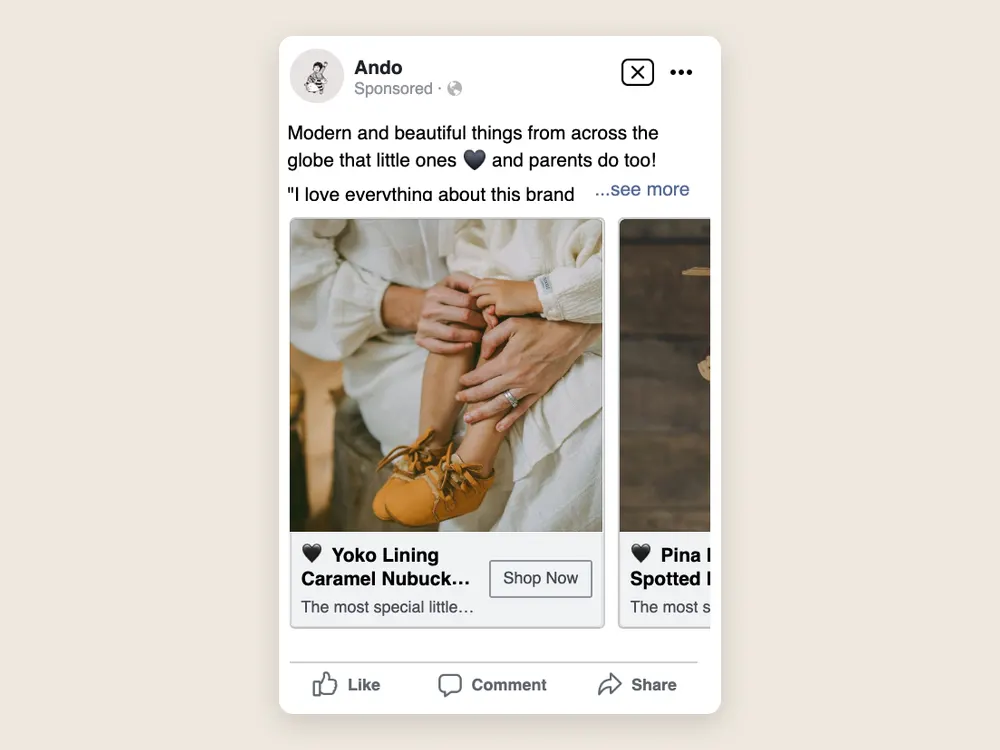
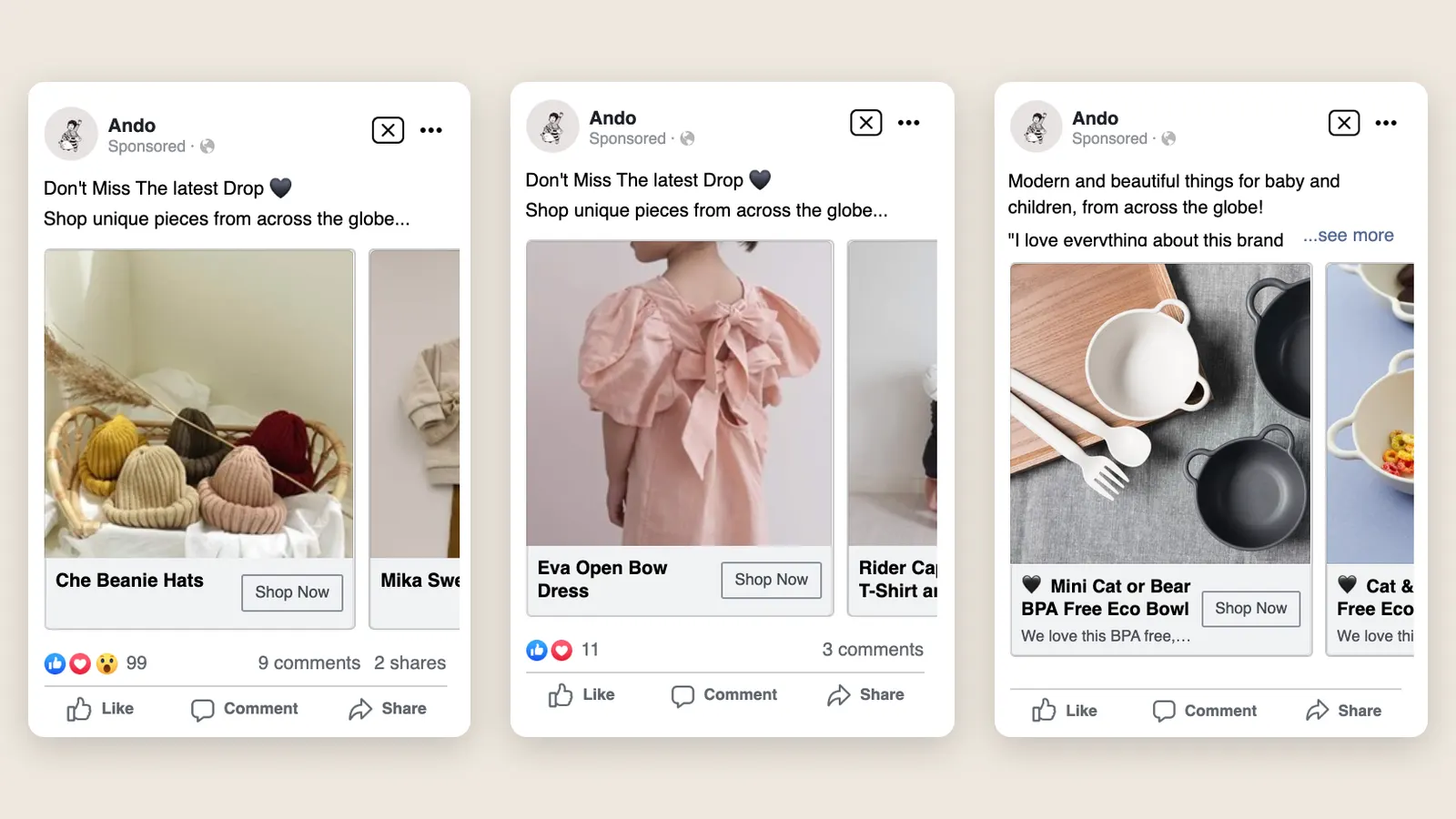
Most of our ads were carousels. Each card showed a single product with its name and a Shop Now button, so a parent could tap straight through to the hat, dress or pair of shoes they liked. The copy stayed short: “Shop unique pieces from across the globe”, or a line from a happy customer: “I love everything about this brand”.
New parents and returning parents, kept apart
We split the account in two. Prospecting campaigns found new parents in the UK and in groups of countries around the world. Retargeting campaigns brought visitors back to buy, with catalogue ads that showed each person the products they had already looked at.
We also showed past customers products that went with what they had bought, tested cost caps and manual bids, and ran short campaigns for the summer sale, Black Friday and the winter sale.
Why it worked
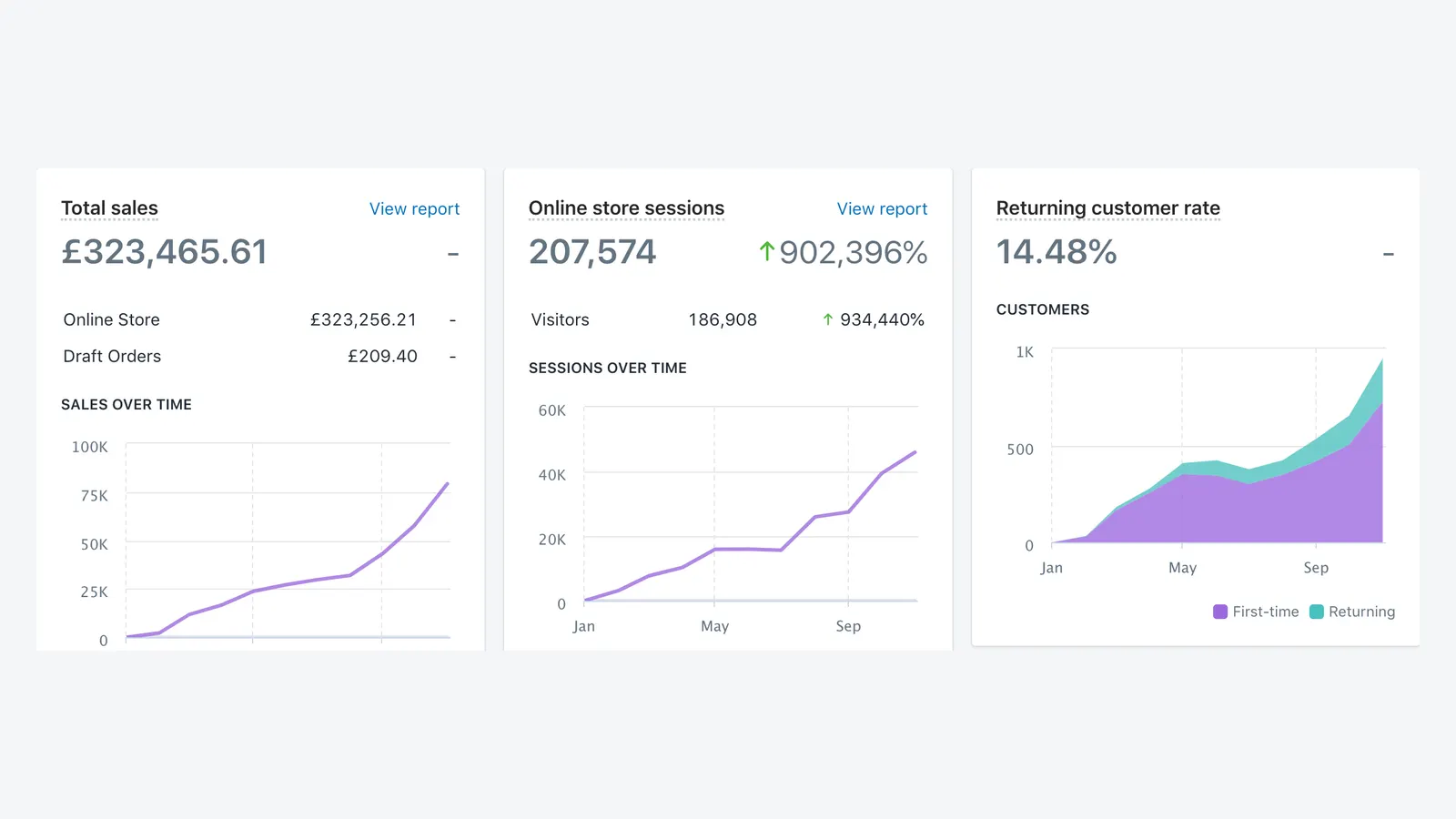
Every pound went behind products parents had already proved they wanted. Retargeting earned the most back for each pound, because those people already knew the shop. As the account grew, monthly orders more than tripled while each order still cost about £12 in ads.
The result
£249,078 of Meta ads brought in £2,697,985 of sales: £10.80 for every £1 spent, across more than 15,000 orders. The ads were seen more than 49 million times.